He
sniffed at her hair. There was a faint trace of the perfume she
always wore, but it floated on a rather stronger chemical smell. That
monstrous bottle he had given her had probably turned to alcohol.
Next birthday, he would buy her three small bottles instead
Once
opened, perfums begin to loose their volatile compounds ( especially
esters, aldehydes and ketones). These compounds are in charge of
their smell and due to the passage of time, they may smell to alcohol
sometimes. Not everybody knows that cosmetic industry is an important
career opportunity for many chemists, where the composition of the
perfum is as important as the addition of masked agents that avoid
copying the scent to the competition.
It
used to be thought the body was more “sensitive” as it got
deeper. But no, it’s like the earth itself, the vividness is at the
surface. You can crush an organ and get no pain, but look at the
skin. One cm. of human skin contains two sensory machines for cold,
twelve for heat, three million cells, ten hairs, fifteen sebaceous
glands, a yard of blood vessels, a hundred sweat glands, three
thousand sensory cells at the end of nerve fibers, four yards of
nerves, twenty-five pressure apparatuses for tactile stimuli, two
hundred nerve cells to record pain. This fantastic factory is our
surface. No wonder our feeling is so exposed. Our hearts are on our
sleeve.
How
many things on the surface which we disregard for not being deep! All
the stuff the skin has! Who needs more? It´s better not to go in
depth hardly ever, you have to surf throughout life . Everything gets
better, the friendship, the work,...if you keep on kindly superficial
Sagnet
had pioneered the innovative use of zinc chloride.
Five
quarts of a 20 percent solution of zinc chloride injected through the
popliteal artery not only preserved a body for a minimum of two
years, but also wrought a wondrous transformation, giving the body
the
Extravagant
claims were made of the Sagnet process, stating that the remains
became a “shell in effigy; a sculpture.”
In
effect, the antiseptic characteristics have been used to embalm and
recompose cadavers throughout time, especially in the XIXth century.
With this method, the facial features were restored in case of
violent death. So, it was bound to be very used in funerals with
militar honours.
I´m
not quite sure that this Sagnet really exists, because this book is
as interesting as weird.
I
was like the electric bulb of the fire department from Livermore,
California, which a hand switched it on in 1901 and no hand has
switched it off until today
This
bulb is indeed famous for being on for very long. You can see it
streaming via this webcam, where people from anywhere in the world
can admire this phenomenon, which goes to show that things aren´t
made nowadays as well as they used to.
Its
only secret is that it´s made of more and better materials than
current bulbs, which are surrendered to planned obsolescence.
“The
silence of infinite space terrifies me,” he murmured, squinting one
night through Martin’s telescope at a faint smear of light that the
boy assured him was a galaxy several times bigger than the Milky Way.
“Why?”
Austin
straightened up and rubbed the small of his back. “I was quoting
Pascal, a famous French philosopher of the seventeenth century.”
“Interesting
he knew that space was silent,” Martin remarked, “that long ago.”
“You
mean, there’s no noise at all up there? All those stars exploding
and collapsing without making a sound?”
“You
can’t have sound without resistance, without an atmosphere.”
“So
the Big Bang wasn’t really a bang at all?”
“’Sright.”
“Doesn’t
it frighten you, though, Martin, the sheer size of the Universe?”
“Nope.”
This
is the most common way to find science mistakes in films. Sound is a
mechanical wave, so it needs a medium to propagate. In contrast,
electromagnetic waves, like light, can travel through vacuum.
I
think that 2001: A Space Odyssey was the first film to show outer
space as silent. “No one can hear you scream in space”, according
to the advertising of the film Alien. I am not fussy about this, a
film with noises in outer space doesn´t bother me, I understand it´s
a poetic license. Indeed, if we want to be very strict, the concept
of vacuum is also very controversial
...
he read every scrap he was sent, and even stooped in the alleys to
pick up a muddy fragment of newspaper and scan it for a message.
Thus,
he read, it
was already known in 1935 that the natural world was governed by four
kinds of force: in order of increasing strength, they are the
gravitational, the weak, the electromagnetic, and the strong.
Reading, he found himself rooting for the weak forces; he identified
with them. Gravitation, though negligible at the microcosmic level,begins
to predominate with objects on the order of magnitude of a hundred
kilometers, like large asteroids; it holds together the moon, the
earth, the solar system, the stars, clusters of stars within
galaxies, and the galaxies themselves.
To Richard it was as if a faint-hearted team overpowered at the start
of the game was surging to triumph in the last, macrocosmic quarter;
he inwardly cheered.
I
don´t have much to add, since John Updike himself comments on the
original text, which we are told is from ´The Forces of Nature,´ a
conference by Steven Weinberg. Physicist dream of being able to
reduce all these forces to one, precisely the goal of the big
unification theory, as has already been accomplished with electricity
and magnetism being unified as electromagnetism
I
think that, when I was a student, the interaction electroweak,
unifying the weak nuclear force and the electromagnetic force, has
almost been completed. I don´t know how things stand now.
How
can one not like and identify with gravitation, which among the four
forces, is the only one we are familiar with?
What’s
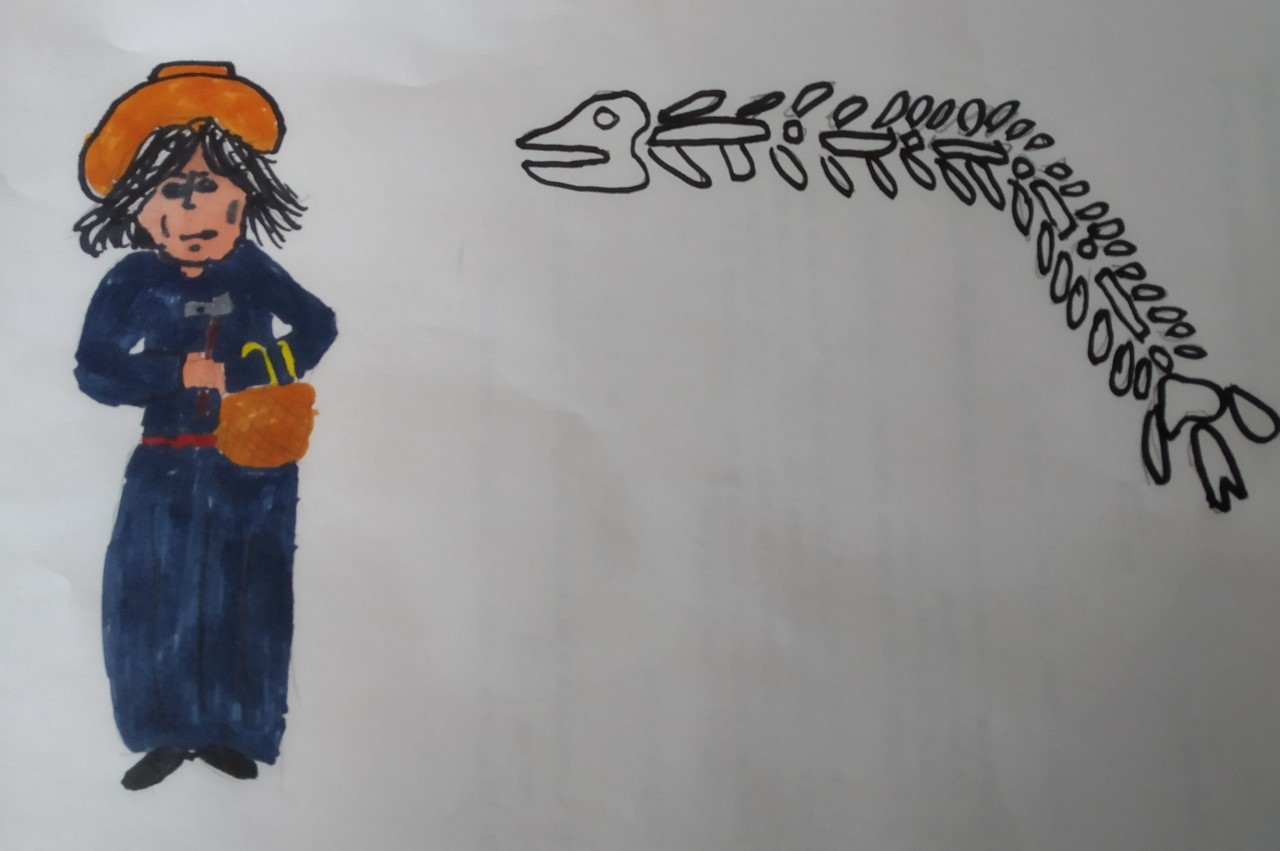
more, he blamed himself for Cora’s adoration for the geologist Mary
Anning: she’d never shown the least interest in grubbing about
among rocks and mud until finding herself at an Ambrose dinner party
seated beside an elderly man who’d spoken with Anning once and been
in love with her memory ever since. By the time Cora had heard his
tales of the carpenter’s daughter who grew strong after a lightning
strike, and of her first fossil find at twelve, and her poverty, and
her martyrdom to cancer, she too was in love and for months
afterwards talked of nothing but blue lias and bezoar stones.
This
blog wants to join the trend of recognizing female scientists. We
want to add the paleontologist Mary Anning (although the text calls
her a geologist) to the list headed by Marie Curie.
Paleontology
and Geology don’t have a good reputation among scientists. So, the
unfortunate Mary Anning suffered a double discrimination: one related
to her gender at the time, and the other by ‘authentic,’ hard
scientists.
Still
at that hour, or again, the temperature seemed to make things
tremble. Those situations of intense heat, which make you rehearse
descriptions with vague outlines, refractions of light, objects in
slow motion, etc. And yet I was impressed by the opposite, the speed;
as if temperature proceeded to disintegrate in terror, and reality
itself, in its multiple joints, was struck by fear and wanted to
escape this situation immediately.
As
soon as you went out to the garden, neither having taken the first
step nor having already felt the impact of the heat, you noticed the
unease, nature at once watery and squelched.
You
knew that underneath that calmness lay a latent combustion
encompassing all the elements, revealed by isolated and spontaneous
reactions.
This
is something that literature can do with physical phenomena:
illuminate them with images and so make them better understood. We
physics teachers always try to do this. Everybody has seen this
optical illusion on the horizon of the road on a very sunny day. You
yourself melt by mimesis upon seeing, that´s why we call it a mirage
Once
you understand and feel the phenomenon, by virtue of the text above,
it almost matters less to know that it´s caused by the different
densities of...
"Loose
ends everywhere. No police work. Nothing checked. Like algebra."
"What's
algebra got to do with it?"
"You've
got to prove what can be proved, first. Find the constants. Did she
really go to the theatre? Was she alone? Did the neighbours hear her
come back? If so, what time? Was Fennan really late Tuesdays? Did his
Missus go to the theatre regular every fortnight like she said?"
It´s great
that detectives use mathematics methods
in their work.
You
can’t rush an investigation.
The first thing you have to find out is whether a
solution even exists. Or, in mathematicians’
terms, whether the system of
equations is
compatible with the data.
Because, what´s
the point in trying to solve something that
has no solution?
All these doubts came from the fact that humans can´t really know anything of truly happens in the World. For instance, we can only see the colours between red and blue, but there are more of them. And then, tehre´s all this fuss about vibration speed and about infrared and ultraviolet
Visible light is the intervale of wavelengths or frequencies visible to the human eye. Outside this intervale are radio waves, micorwaves, infrared, ultraviolet, X rays... It seems appropiate, as an image of all the things mankind cannot iluminate with is knowledge. I like even more how the author admits that this is a mess, it reminds me of another text by Cela that reads "you don´t know a word about this"
It
was unclear precisely why this had happened, she added, except that
everything to do with literature always seemed to be shrinking, as
though the world of books was governed by a principle of entropy
while everything else proliferated and expanded.
I´m
sorry to correct this post for two reasons. Firstly, because I don´t
like telling people what it´s wrong and secondly, because I´ve
enjoyed so much Rachel Cusk´s books that I think it´s not fair. But
I have to admit that I´m not convinced in this idea of the principle
of entropy aplied here in something that seems to be shrinking. In my
humble opinion, the entropy tends to be joined to disorderly and huge
growths
Just
the opposite of what happens in her books, in which seems that
nothing is happening but everyone who meets the narretor- author
becomes an excelent talkative
She
liked to repeat a story about seeing Einstein lecture at Bell Labs
(where she’d done some mechanical drawing in the war years—a
detail it took us years to unearth). She swore that during the
question period afterward, Einstein had to have some engineer in the
auditorium explain an elementary law of mechanics to him. When the
guy was shocked that the great physicist didn’t know such a simple
thing, Einstein said, “I never bother to remember anything I can
look up.” She loved that idea—a genius who couldn’t open a can
of tuna fish but could order the entire universe in the caverns of
his own skull. She also said that he bowed his head between questions
like he was praying, then raised it up to give answers like those
mechanical swamis wearing turbans that guessed your future for a
quarter at Coney Island. At the crowded reception after the lecture,
she claimed that nobody even tried to talk to him. He sat in a
straight chair in the corner by himself looking like somebody’s
daffy uncle.
Why
are there so may anecdotes about Einstein as absent-minded, always
looking like ‘somebody´s daffy uncle’? Will he be known in
future as the apocryphal author of cheap help-self aphorisms,
Facebook wall style? Was this mystic and oriental wiseman image
something he deliberately cultivated? Does the fact that he didn´t
like combs influence this image?
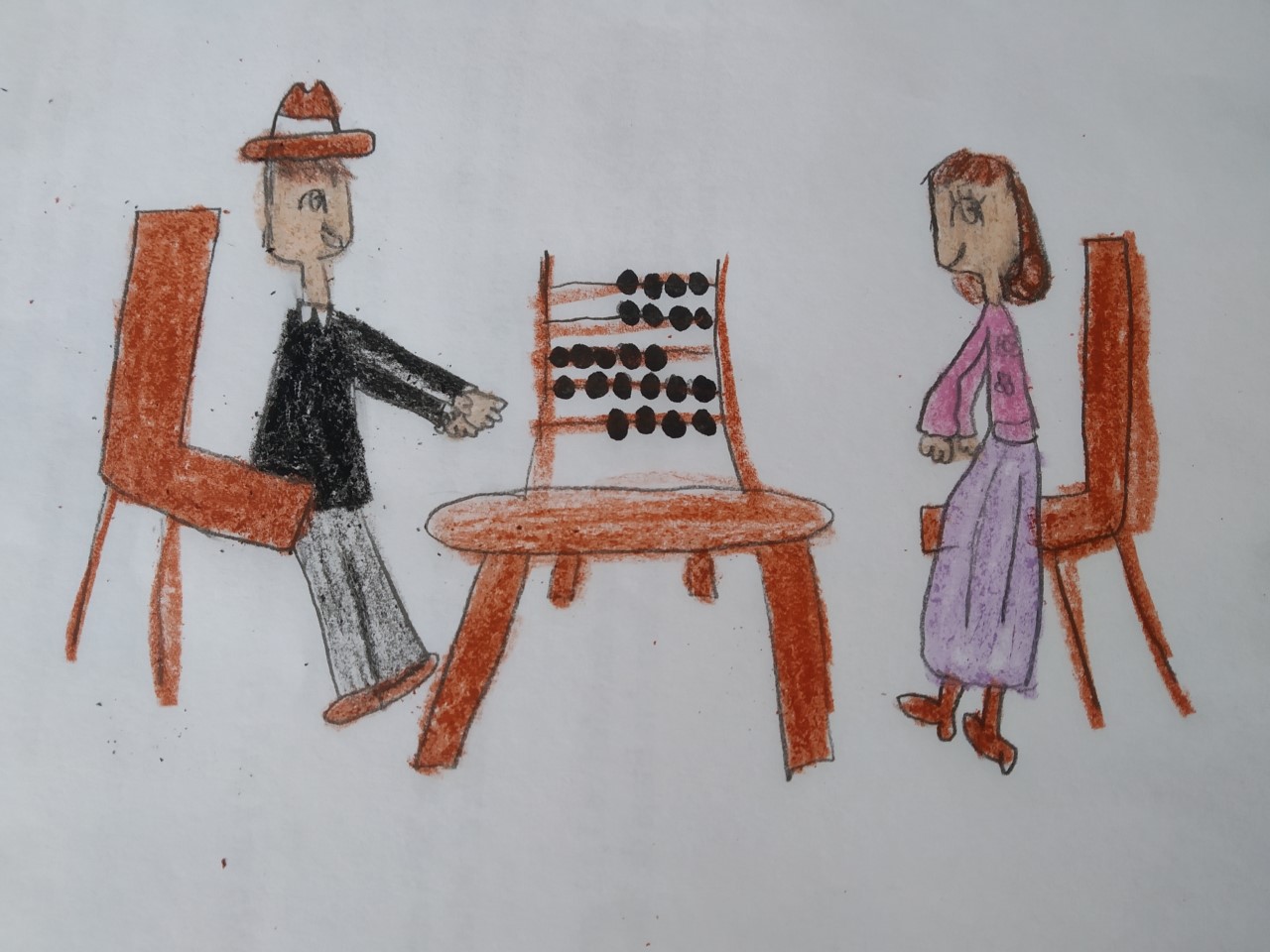
‘And you stayed there eight years: you are now, then, eighteen?’
I assented.
‘Arithmetic, you see, is useful; without its aid, I should hardly have been able to guess your age. It is a point difficult to fix where the features and countenance are so much at variance as in your case
There
he goes! Nothing in his pockets, nothing up his sleeves...and he
determines her age. Nowadays, Mr Rochester would be accused of doing
mansplaining, but I recognize his merit of setting out nimbly the
ecuation 10+8=18.
I
wonder whether this skill will help him to manage to flirt with her.
I´ll find out when I finish the book.
You
aint got but two shells. Maybe just one. And they’ll hear the shot.
Yes
they will. But you won’t.
How
do you figure that?
Because
the bullet travels faster than sound. It will be in your brain before
you can hear it. To hear it you will need a frontal lobe and things
with names like colliculus and temporal gyrus and you won’t
have them anymore. They’ll just be soup.
I
think he is right. The speed of sound is about 340 m/s. So if you are
about 700 metres
away from a shooting gun, you should heard the shot two seconds later. The bullet reaches you before its sound, if it´s
supersonic. This is something that sound technicians must keep in
mind.This video explains it very well:
The
poet works with advances which he spends before
finishing anything, and he spends everything on tickets and
transfers, because poetry is a journey to the unknown, is like the
extraction of radium, where you get a gram of product after years of
work.
I
do agree. Poetry
could be compared to any process of separating components, as Bonilla recreates what
Maiakovski
wanted
to mean.Moreover,
we
may
say that any
poet
distils reality
and gets the poetic essence. The world
would be the gross sample ( the gangue) and poetry
would be the ore which you have to extract
I´ve
got robotic blood in my veins I´m
a robot which isn´t worth it any more
I
don´t know neither what I´m doing nor what I´m saying
operating
system two dot fig
I´m
moving around here
I´m
moving around there
but
I´m scared, they want to take me to pieces
my
memory fails, my hard drive fails
my
camera is broken, I see everything dark
Dude,
I get mad when I get a screw dropped
and
I´m becoming rusted because I´m metallic
and
little by little I notice I´m loosing my brightness
Old
man, like humans, I´m already loosing my reflexes
and
bad news, my garantee is over
because
I was made in Almendralejo
what
the heck, what the heck, no matter what I do,
I´ll
turn into scrap,
what
the heck, what the heck, no matter what I do,
I´ll
turn into scrap,
Prrrrii...
prrrriii... pi, Roger... Roger
Prrrrii...
prrrriii... pi, Roger... Roger
Prrrrii...
prrrriii... pi, Roger... Roger
Prrrrii...
prrrriii... pi, Roger... Roger...
I
was almost hired in Star wars
What
a terrific robot! , what a pretty thing!
but
I was programmed with a big task,
to
guess why flies rubb their little legs
it´s
taken me many years of investigation
watching
how they fly over a turd
I´m
so fed up...so fed up
I
didn´t know how hard the robot life was
Dude,
I get mad when I get a screw dropped
and
I´m becoming rusted because I´m metallic
and
little by little I notice I´m loosing my brightness
Old
man, like humans, I´m already loosing my reflexes
and
bad news, my garantee is over
because
I was made in Almendralejo
what
the heck, what the heck, no matter what I do,
I´ll
turn into scrap,
what
the heck, what the heck, no matter what I do,
I´ll
turn into scrap,
what
the heck, what the heck, no matter what I do,
I´ll
turn into scrap,
what
the heck, what the heck, no matter what I do,
I´ll
turn into scrap,
what
the heck, what the heck, no matter what I do,
I´ll
turn into scrap,
The
Flip
flops,
possessed by The Red Hot Chili Peppers spirit, re-enact the raising
of consciouness of the machines in a way that we hadn´t seen since
Blade Runner and his tears in the rain
And
it´s also remarkable the excessive nihilism of the expression "
what the heck, what the heck, no matter what I do, I´ll turn into
scrap",
completely human. The robot almost seems to start singing by Camarón
that song of" He also condemns us to death when God gives us the
life"
And
that´s the way we both, robots and obsolescent humans,are living. On
the one hand, we complain about the dissatisfaction of the researches
and the turds, and on the other one, we are afraid of being taken
apart at a junkjard.
It is known that
if a message is written with lemon
juice on a clean sheet of paper
there will be no sign of it. But if
the paper is held for a moment to
the fire then the letters turn brown
and the meaning becomes clear.
Imagine that the whisky is the fire
and that the message is that which
is known only in the soul of a man
— then the worth of Miss Amelia’s
liquor can be understood
This
is already the second formula for invisible ink we post in this blog.
The first one was made by Poe in The Gold Bug. In this text, we are
also told about the role of alcohol over human souls through a good
image. Somenthing, by the way, that we have been able to feel last
Christmas
His
career on the way to the Támesis mayoral service was stunning. I can
not say it was a meteoric one because meteors fall down and Carlos
was always going up , rising, reaching the summit.
It´s
very clear what Fernando Vallejo wants to mean by that. But if we
were a bit fusspot, which is not the intention of this blog, we could
say that what really falls down is a meteorite, not a meteor. The
meteor would be a shooting star and this is the sense of the
expression ´meteoric career´, from my humble opinion.
But
they are really complex concepts to deal with, as it was already said
because of Juan Benet.
“Lidia,
you and me, we know a thing or two about chemistry so what’s
sulfuric acid stink of? It stinks of fart. Sulfuric acid stinks of
fart.”
It´s
a chemical common mistake to mixe up the sulfuric and the sulfhidric
acid. It´s the sulfhicdric acid, also known as hydrogen sulfide,
which stinks of fart. That´s to say, it is the fart which stinks of hydrogen sulfide
"That’s
it, old man,” he said. “Never say die. You have tobe
mad, it’s true, to keep going and hope, but the first reptile who
dragged his belly out of the water a million years ago to
live on land without lungs and tried to breathe all the same—
he too was mad. In the end the reptile became a man. We
must always try to do the best we can— perhaps one day well
become human, who knows"
It´s
the first time I hear about the relation between madness and
evolution. I wonder whether Darwin took it into account on his work.
I´ve never been very daring but I can appreciate what courageous
people are able to do. It´s called ´to go out of your comfort zone´
nowadays. Anyway, the last sentence of this post seems to be a good
advice for almost everything in life.
And
now, as I say, I'd take a small oscillating saw and carefully remove
your complete calvarium--the whole vault of the skull. This would
expose the top half of the brain, or rather the outer covering in
which it is wrapped. You may or may not know that there are three
separate coverings around the brain itself the outer one called the
dura mater or dura, the middle one called the arachnoid, and the
inner one called the pia mater or pia. Most laymen seem to have the
idea that the brain is a naked thing floating around in fluid in your
head. But it isn't. It's wrapped up neatly in these three strong
coverings, and the cerebrospinal fluid actually flows within the
little gap between the two coverings, known as the subarachnoid
space. As I told you before, this fluid is manufactured by the brain
and it drains off into the venous system by osmosis
The
coverings of the brain are very well explained. The tale is about a
dyng man who is offered to keep his brain alive in a basin, with an
eye as the only way to interact with the enviroment. The man accepted
the offer only because he would be able to read.
At
the end of the short story, the wife wants to take her husband´s
brain home because she realizes that she likes him better now and
it/he gives her no trouble.
Last
month, in Yale´s University a group of scientists has brought brains
of pigs back to life. This fact is linked with another of Dahl’s
tales – ‘Pigs’, a wonderful allegation in favour of veganism,
just like the film The Executioner, by Berlanga, is the best
allegation against death penalty
The
day Updike died, he reread something the writer said in an interview
and that he’d always found really moving: “My first thought about
art, as a child, was that the artist brings something into the world
that didn’t exist before, and that he does it without destroying
something else. A kind of refutation of the conservation of matter.
That still seems to me its central magic, its core of joy.”
One
good thing about this definition is that it is correct regardless of
the quality of the art. A bad novel, a bad song, a bad movie...they
also bring something to the world, they bring order. From my point of
view, this is more of a refutation of the second law of
Thermodynamics, than of the conservation of matter. A sculptor, for
instance, just redistributes the preexisting matter, like David is
said to have been taken out from a piece of marble by Michelangelo
Only
Embryo Growth and the birth of a new living being are similar to the
artistic creation, that is why we say things like “the artist has
given birth to a masterpiece”
The
Golden Record included greetings in fifty-four human and one whale
language, ninety minutes of music from around the world, and 117
pictures of life on Earth. These pictures were meant to suggest the
widest possible range of human experiences. Only two things were
off-limits. NASA decreed that no pictures could depict sex and no
pictures could depict violence. No sex because NASA was prudish and
no violence because images of ruins or bombs exploding might be
interpreted by aliens as threatening.
The
Golden Record was launched in 1977 inside the space probe Voyager.
It´s like a message in a bottle in the sea, but there are very litle
chances of someone receiving it. And it´s even more unlikely that
the hypothetical recipient could decode the message.
The
film The Arrival answers accurately the question of how to find a
shared language with an ET civilization
Here
you have a man (or woman) opened up from head to foot like an ox at a
butcher shop and there, leaning over him (or her) with all his
implements, the artist. He may know quite well what the man (or
woman) died of. But “why,” in its deeper sense, is another
matter. Another matter, which, to be brought into the open, would
require knowledge of the “how”: how this man (or this woman) had
lived. This man (or woman) has loved; hated; lied; suffered; and
enjoyed the love, hatred, and lies of others. But no trace of all
this at the autopsy
You
can´t reach for the moon. Human soul is impenetrable and plausible.
It would be very unfair that the autopsy gave away about our privacy.
And the other way round, your closest friend doesn´t know about your
pancreas.
It´s
curious how this middle-20th-century
novel
is pioneer in the use of inclusive language
BLOOM:
(Gently) Give me back that potato, will you?
ZOE:
Forfeits, a fine thing and a superfine thing.
BLOOM:
(With feeling) It is nothing, but still, a relic of poor mamma.
ZOE:
Give a thing and take it back God’ll ask you where is that You’ll
say you don’t know God’ll send you down below.
BLOOM:
There is a memory attached to it. I should like to have it.
STEPHEN:
To have or not to have that is the question. ZOE: Here. (She hauls up
a reef of her slip, revealing her bare thigh, and unrolls the potato
from the top of her stocking) Those that hides knows where to find.
(...)
On
the doorstep he felt in his hip pocket for the latchkey. Not there.
In the trousers I left off. Must get it. Potato I have. Creaky
wardrobe. No use disturbing her. She turned over sleepily that time
(...)
I
am looking for that. Yes, that. Try all pockets. Handker. Freeman.
Where did I? Ah, yes. Trousers. Potato. Purse. Where?
(...)
(She
hauls up a reef of skirt and ransacks the pouch of her striped blay
petticoat. A phial, an Agnus Dei, a shrivelled potato and a celluloid
doll fall out)
(...)
ZOE:
I feel it. (Her hand slides into his left trouser pocket and brings
out a hard black shrivelled potato. She regards it and Bloom with
dumb moist lips.)
BLOOM:
A talisman. Heirloom.
(...)
Sir?
Spud again the rheumatiz? All poppycock, you’ll scuse me saying.
For the hoi polloi. I vear thee beest a gert vool.
Regardless
of how little are we able to contribute to bringing some order into
this chaotic novel, this tiniest contribution will be a remarkable
succes
It´s
true: people used to take a potato, halfway between therapy and
talisman. I don´t really know if this local treatment is effective
or not. I think the potato juice is good for some diseases, but I´m
not sure.
In
the novel itself some doubts about this therapy appear in the last
paragraph: “all poppycock, you’ll scuse me
saying. For the hoi polloi.”
He
was in sociology, and althought many of us in the proper sciences
thought that the social sciences people were empty vesses who had too
much time on their hands and worte reams of unreadable books, we saw
Ikenna differently. We forgave his peremtory style and did not
discard his panphlets and rather admired the erudite asperiry which
with he blazed through issues; his fearlessness convinced us
It
sometimes happens that Science people hate Social Sciences intensely.
This intensity is rarely provoked by Humanities disiciplines like
Philologies , or it´s at least another sort of hatred. I think
Social Sciences are accused of trying to disguise themselves by using
instruments of the natural sciences: stats, graphs… ‘The
Strangled Reason’, by Carlos Elias explains this phenomenon very
wel
As
he comes away, he remembers the famous thought experiment he learned
about long ago on a physics course. A cat, Schrödinger’s Cat,
hidden from view in a covered box, is either still alive, or has just
been killed by a randomly activated hammer hitting a vial of poison.
Until the observer lifts the cover from the box, both possibilities,
alive cat and dead cat, exist side by side, in parallel universes,
equally real. At the point at which the lid is lifted from the box
and the cat is examined, a quantum wave of probability collapses.
None of this has ever made any sense to him at all. No human sense.
Surely another example of a problem of reference. He’s heard that
even the physicists are abandoning it. To Henry it seems beyond the
requirements of proof: a result, a consequence, exists separately in
the world, independent of himself, known to others, awaiting his
discovery. What then collapses will be his own ignorance. Whatever
the score, it is already chalked up. And whatever the passengers’
destination, whether they are frightened and safe, or dead, they will
have arrived by now.
Something
which I am very proud of is the fact that, over 4 years, I have
avoided some unpleasant aspects in the 86 posts of this blog.
Searching for mistakes has not beeen then main aim of this blog,
mainly to get away from my job. I also avoided the scientific
clichés; you can´t picture how many times Schrödinger´s Cat
appears in novels, it´s almost one more character.
It´s
been difficult, but this is only the second time we speak about the
damn cat. The first one was just to devote some words to a good movie
He
turned to her and said, “About time,” when the train finally
creaked in, with the familiarity strangers adopt with each other
after sharing in the disappointment of a public service. She smiled
at him. The graying hair on the back of his head was swept forward, a
comical arrangement to disguise his bald spot. He had to be an
academic, but not in the humanities or he would be more
self-conscious. A firm science like chemistry, maybe.
One
more time: the aim of this blog is the good vibes between Science and
Humanities, but we don’t want to hide the truth. If this lady
thinks that male Science teachers in general, and the Chemistry ones
particulary, have a bigger composure with women, it won’t be here
that we will disagree with her.
Maybe
the reader has noticed that in some posts of this blog the
relationship between Literature and Science is a little bit
unnatural. We have forced this relationship in a case like this,
when the book is so good that it deserves we talk about it