- - Well
then: if a battalion of soldiers marches across a bridge in step, then the
bridge can easily collapse- there have been cases- and so when a colum crosses
a bridge, the soldiers are ordered to march out of step
It´s a very ugly
thing to point out mistakes, something that we don´t want to do in this blog.
Ever worse it´s to show exagerations like this, beautiful but fake. Bridges
like Tacoma´s felt down because os several causes, not only resonance.
Lont time ago
before Tacoma, they said a bridge in Brougthon collapsed because soldieres were
marching on it, and Napoleon was known for asking his soliers to march out when
they cross a bridge.
When I left my
boxed township of Il inois farmland to attend my dad’s alma mater in the lurid
jutting Berkshires of western Massachusetts, I al of a sudden developed a jones
for mathematics. I’m starting to see why this was so. Col ege math evokes and
catharts a Midwesterner’s sickness for home. I’d grown up inside vectors, lines
and lines athwart lines, grids—and, on the scale of horizons, broad curving
lines of geographic force, the weird topographical drain-swirl of a whole lot
of ice-ironed land that sits and spins atop plates. The area behind and below
these broad curves at the seam of land and sky I could plot by eye way before I
came to know infinitesimals as easements, an integral as schema. Math at a hil
y Eastern school was like waking up; it dismantled memory and put it in light.
Calculus was,
quite literal y, child’s play.
Maths are eveywhere, although some landscapes are more
explicit than others. For example, the Mid-West, but also the olive groves in
the province of Jaén.
The ability of thinking abstractly about mathematical entities of Nature,
typical of huge intelligences, is one of the shortest ways to madness.
I,ve read Foster Wallace tennis texts yet again ( I used to love them when I
was younger) because I,m playing tennis these days due to Covid ( a sport full
of geometry and trigonometry, by the way). So, we can say that the Covid has transformed me from a player of friendly games
of football to an amateur tennis one.
In fact, when I knew the news about Maradona death, I was playing tennis and this paradox made me feel a bit guity
Sometimes
the bar felt like the best place in the world, other nights it felt like the
world itself. After one especially grueling day at the Times, I found the men in a circle at Uncle Charlie’s end of the
bar. They had arranged cocktail garnishes in the shape of the solar system, a
lemon as the sun, and they were moving the olive around the lemon, explaining
to each other why New York gets dark before California, why seasons change, how
many millennia we have before the whole thing falls apart. I stood behind them,
letting their conversation orbit around me. What’s a black hole anyway? A thing
that sucks up everything in its path. So it’s like my ex? Yeah only smaller.
I’ll tell her you said that. A black hole’s like the Grand Canyon with extra
gravy. Not gravy, dipshit—gravity. What’d I say? Think of it this way—the
universe is held together with gravity, your ex is held together with gravy.
Don’t use an olive for the earth, I hate olives. Whaddya got against olives?
Pits—I don’t like food that fights me. Who the fuck ate Mars? Sorry, I see a
cherry, I eat a cherry. How big is the fucking earth anyways? It’s twenty-five
thousand miles around. That sounds almost walkable. You don’t even like to walk
to the corner for the Daily News. You
mean to say everyone in this joint is going sixty-seven thousand miles an hour
right now? No wonder I feel so fucking dizzy.
Apparently, a bar is not the best place to discuss science (it´s very
difficult to argue about science, in any case) , but alcohol can do anything.
In the text, it´s all very well explained: black holes, the solar system, translation speedof the earth, which is higher in the winter, the
earth´s diameter…
What an extraordinary thing is a bar with a good
parish!! As the song goes:
It had been long known that the air which encircled
us was a compound of oxygen and nitrogen gases, in the proportion of twenty-one
measures of oxygen, and seventy-nine of nitrogen, in every one hundred of the
atmosphere. Oxygen, which was the principle of combustion, and the vehicle of
heat, was absolutely necessary to the support of animal life, and was the most
powerful and energetic agent in nature. Nitrogen, on the contrary, was
incapable of supporting either animal life or flame. An unnatural excess of
oxygen would result, it had been ascertained, in just such an elevation of the
animal spirits as we had latterly experienced. It was the pursuit, the
extension of the idea, which had engendered awe. What would be the result of a
total extraction of the nitrogen? A combustion irresistible, all-devouring,
omni-prevalent, immediate; the entire fulfillment, in all their minute and
terrible details, of the fiery and horror-inspiring denunciations of the
prophecies of the Holy Book
We´d rather talk about the
composition of the air with this post by Poe than with the famous song by
Mecano ( oxygen, nitrogen and argon) It´s more suitable to the spirit of this
blog. The role of Nitrogen, so low considered, is very important to temper the
explosive character of the oxygen avoiding the spontaneous combustions.
Nitrogen has its own cycle as well, which is essential at different levels for
life in our planet.
So, there it is the Nitrogen, so
noiseless but basic and majority in the air, quiet and vital.
Science
can analyse a pork-chop, and say how much of it is phosphorus and how
much is protein; but science cannot analyse any man’s wish for a
pork-chop, and say how much of it is hunger, how much custom, how
much nervous fancy, how much a haunting love of the beautiful.
The
man’s desire for the pork-chop remains literally as mystical and
ethereal as his desire for heaven
Ok
then, Science says how much Phosphorus there is in a chop, which is
no mean feat. But, as Chesterton points out, Science doesn´t say too
much about human desire about chops or other human desires. We have
other stuff for this purpose, such as Arts or Poetry. Something like
that we talked about in this blog regarding Emilia
Pardo Bazán and Ramón y Cajal
I
have forced a bit this post to talk about this record, ´Love´, that
is going to be really important in flamenco. The operation included
in the lyrics is easy to calculate, but it´s the way to begin in
algebraic language, actually. So, the equation would be 24 +x = 27,
where x is the extra hours of love
If
a man stands before a mirror and sees in it his reflection, what he
sees is not a true reproduction of himself but a picture of himself
when he was a younger man. De Selby's explanation of this phenomenon
is quite simple. Light, as he points out truly enough, has an
ascertained and finite rate of travel. Hence before the reflection of
any object in a mirror can be said to be accomplished, it is
necessary that rays of light should first strike the object and
subsequently impinge on the glass, to be thrown back again to the
object to the eyes of a man, for instance. There is therefore an
appreciable and calculable interval of time between the throwing by a
man of a glance at his own face in a mirror and the registration of
the of the reflected image in his eye
What
a strange argument, I always feel the opposite: I look older than I
think I am. Someone says you should never look at yourself in the elevator mirror, not even when you are 20 years old, and I guess he is right
As
for O´Brien´s text, it´s an excessive version of the famous twin
paradox of Einstein, in which a second brother is not even necessary.
As they say, an exaggeration is sometimes the most accurate lie
There
are, finally, varieties of birds which live in complete freedom even
at the breeding moments. The sparrow- a rascal bird, fornicating and
individualistic- may be an example of these ungrateful animals.
Sparrows live in a regime of systematic and perpetual social
gathering and they don´t mind neither the blood ties nor the birdie
feelings, that although rudimentaries, they exist somehow.
Now
I understand the expression
‘Hey, Sparrow!’better,
the one which is used by males of human specie when they see each
other in a delicate situation or when they tell some naughty plan to
one each other . I would never think of
a bird in
such a way with such a pacific appearance. Most birds
(you can also say: Hey, Bird!) interrupt their social-gathering or
café rules while their breeding time, but sparrows keep
it even in this critical situation. In this time, their chest swells
up so much that they seem to be more male doves than sparrows.
Mercury,
for example. Imagine a drop of mercury on the top of a marble table.
Then, lift the table and let the mercury slide. It´s like water but
more perfect, because it´s metal and because it doesn´t dry up. If
you throw water to a crystal, it spreads and melt. And it dries,
besides. Mercury not. Mercury is the most perfect drop that exists.
And although steel is really spectacular, mercury is more spectacular
than steel because it´s liquid and cold. Mercury is a funny thing
The
mercury thermometers used to be one of the first experiences of
scientific surprise in the childhood and their desaparition makes the
children loose it. When you were ill and the thermometer broke down,
the drops of mercury looked like a strange flock.
The
mist of fever joined to the amazement made the experience really odd.
We were told about this in the poem metales pesados by Carlos Marzal.
In
other post, we´ll talk about the Mad hatter from the book Alice in
Wonderlad. He was mad because of an intoxication of mercury,
something very usual in that job
Everything
our body does, other than the functioning of the senses, escapes our
notice. We know nothing of our most vital processes-circulation,
digestion, and so on. It is the same with our spirit; except for the
superficial pattern of ideas, we are ignorant of its activities and
changes, its crises. Nothing but an illness makes us aware of the
profound workings of our body. In the same way we realize those of
our mind and spirit when we become unbalanced.
The
whole physiology occurs in the dark, the human body is like a fridge,
dark until you open it. Everything takes place in the dark, hidden
to the daylight but microscopically. Only when things go wrong, we
are aware of them and begin to pay attention to. " We know about
love for what it illuminates, for what it twists and increases and
rules". We have to make do with this indirect knowledge of our
body, in the way as with the knowledge of love in these lines by
Manuel Alcántara
He
sniffed at her hair. There was a faint trace of the perfume she
always wore, but it floated on a rather stronger chemical smell. That
monstrous bottle he had given her had probably turned to alcohol.
Next birthday, he would buy her three small bottles instead
Once
opened, perfums begin to loose their volatile compounds ( especially
esters, aldehydes and ketones). These compounds are in charge of
their smell and due to the passage of time, they may smell to alcohol
sometimes. Not everybody knows that cosmetic industry is an important
career opportunity for many chemists, where the composition of the
perfum is as important as the addition of masked agents that avoid
copying the scent to the competition.
It
used to be thought the body was more “sensitive” as it got
deeper. But no, it’s like the earth itself, the vividness is at the
surface. You can crush an organ and get no pain, but look at the
skin. One cm. of human skin contains two sensory machines for cold,
twelve for heat, three million cells, ten hairs, fifteen sebaceous
glands, a yard of blood vessels, a hundred sweat glands, three
thousand sensory cells at the end of nerve fibers, four yards of
nerves, twenty-five pressure apparatuses for tactile stimuli, two
hundred nerve cells to record pain. This fantastic factory is our
surface. No wonder our feeling is so exposed. Our hearts are on our
sleeve.
How
many things on the surface which we disregard for not being deep! All
the stuff the skin has! Who needs more? It´s better not to go in
depth hardly ever, you have to surf throughout life . Everything gets
better, the friendship, the work,...if you keep on kindly superficial
Sagnet
had pioneered the innovative use of zinc chloride.
Five
quarts of a 20 percent solution of zinc chloride injected through the
popliteal artery not only preserved a body for a minimum of two
years, but also wrought a wondrous transformation, giving the body
the
Extravagant
claims were made of the Sagnet process, stating that the remains
became a “shell in effigy; a sculpture.”
In
effect, the antiseptic characteristics have been used to embalm and
recompose cadavers throughout time, especially in the XIXth century.
With this method, the facial features were restored in case of
violent death. So, it was bound to be very used in funerals with
militar honours.
I´m
not quite sure that this Sagnet really exists, because this book is
as interesting as weird.
I
was like the electric bulb of the fire department from Livermore,
California, which a hand switched it on in 1901 and no hand has
switched it off until today
This
bulb is indeed famous for being on for very long. You can see it
streaming via this webcam, where people from anywhere in the world
can admire this phenomenon, which goes to show that things aren´t
made nowadays as well as they used to.
Its
only secret is that it´s made of more and better materials than
current bulbs, which are surrendered to planned obsolescence.
“The
silence of infinite space terrifies me,” he murmured, squinting one
night through Martin’s telescope at a faint smear of light that the
boy assured him was a galaxy several times bigger than the Milky Way.
“Why?”
Austin
straightened up and rubbed the small of his back. “I was quoting
Pascal, a famous French philosopher of the seventeenth century.”
“Interesting
he knew that space was silent,” Martin remarked, “that long ago.”
“You
mean, there’s no noise at all up there? All those stars exploding
and collapsing without making a sound?”
“You
can’t have sound without resistance, without an atmosphere.”
“So
the Big Bang wasn’t really a bang at all?”
“’Sright.”
“Doesn’t
it frighten you, though, Martin, the sheer size of the Universe?”
“Nope.”
This
is the most common way to find science mistakes in films. Sound is a
mechanical wave, so it needs a medium to propagate. In contrast,
electromagnetic waves, like light, can travel through vacuum.
I
think that 2001: A Space Odyssey was the first film to show outer
space as silent. “No one can hear you scream in space”, according
to the advertising of the film Alien. I am not fussy about this, a
film with noises in outer space doesn´t bother me, I understand it´s
a poetic license. Indeed, if we want to be very strict, the concept
of vacuum is also very controversial
...
he read every scrap he was sent, and even stooped in the alleys to
pick up a muddy fragment of newspaper and scan it for a message.
Thus,
he read, it
was already known in 1935 that the natural world was governed by four
kinds of force: in order of increasing strength, they are the
gravitational, the weak, the electromagnetic, and the strong.
Reading, he found himself rooting for the weak forces; he identified
with them. Gravitation, though negligible at the microcosmic level,begins
to predominate with objects on the order of magnitude of a hundred
kilometers, like large asteroids; it holds together the moon, the
earth, the solar system, the stars, clusters of stars within
galaxies, and the galaxies themselves.
To Richard it was as if a faint-hearted team overpowered at the start
of the game was surging to triumph in the last, macrocosmic quarter;
he inwardly cheered.
I
don´t have much to add, since John Updike himself comments on the
original text, which we are told is from ´The Forces of Nature,´ a
conference by Steven Weinberg. Physicist dream of being able to
reduce all these forces to one, precisely the goal of the big
unification theory, as has already been accomplished with electricity
and magnetism being unified as electromagnetism
I
think that, when I was a student, the interaction electroweak,
unifying the weak nuclear force and the electromagnetic force, has
almost been completed. I don´t know how things stand now.
How
can one not like and identify with gravitation, which among the four
forces, is the only one we are familiar with?
What’s
more, he blamed himself for Cora’s adoration for the geologist Mary
Anning: she’d never shown the least interest in grubbing about
among rocks and mud until finding herself at an Ambrose dinner party
seated beside an elderly man who’d spoken with Anning once and been
in love with her memory ever since. By the time Cora had heard his
tales of the carpenter’s daughter who grew strong after a lightning
strike, and of her first fossil find at twelve, and her poverty, and
her martyrdom to cancer, she too was in love and for months
afterwards talked of nothing but blue lias and bezoar stones.
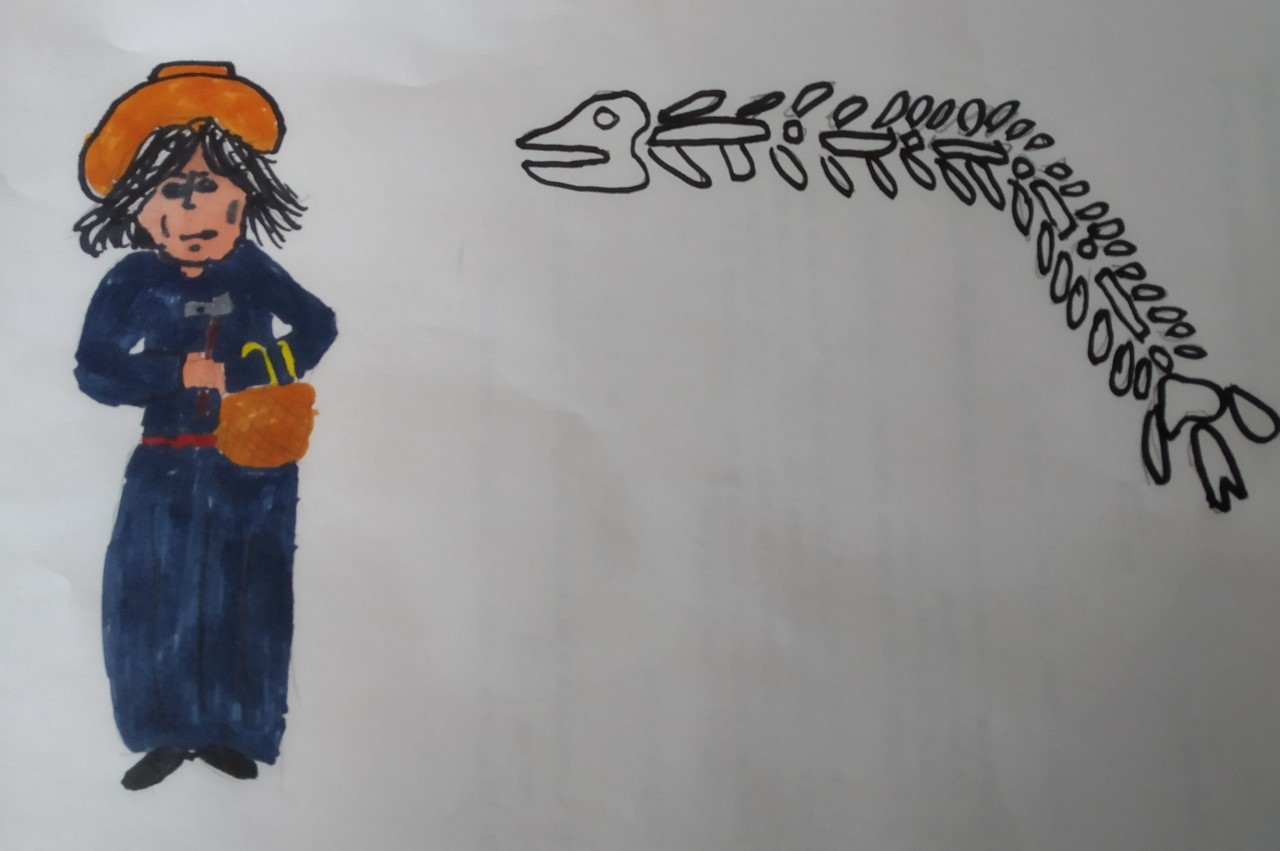
This
blog wants to join the trend of recognizing female scientists. We
want to add the paleontologist Mary Anning (although the text calls
her a geologist) to the list headed by Marie Curie.
Paleontology
and Geology don’t have a good reputation among scientists. So, the
unfortunate Mary Anning suffered a double discrimination: one related
to her gender at the time, and the other by ‘authentic,’ hard
scientists.
Still
at that hour, or again, the temperature seemed to make things
tremble. Those situations of intense heat, which make you rehearse
descriptions with vague outlines, refractions of light, objects in
slow motion, etc. And yet I was impressed by the opposite, the speed;
as if temperature proceeded to disintegrate in terror, and reality
itself, in its multiple joints, was struck by fear and wanted to
escape this situation immediately.
As
soon as you went out to the garden, neither having taken the first
step nor having already felt the impact of the heat, you noticed the
unease, nature at once watery and squelched.
You
knew that underneath that calmness lay a latent combustion
encompassing all the elements, revealed by isolated and spontaneous
reactions.
This
is something that literature can do with physical phenomena:
illuminate them with images and so make them better understood. We
physics teachers always try to do this. Everybody has seen this
optical illusion on the horizon of the road on a very sunny day. You
yourself melt by mimesis upon seeing, that´s why we call it a mirage
Once
you understand and feel the phenomenon, by virtue of the text above,
it almost matters less to know that it´s caused by the different
densities of...
"Loose
ends everywhere. No police work. Nothing checked. Like algebra."
"What's
algebra got to do with it?"
"You've
got to prove what can be proved, first. Find the constants. Did she
really go to the theatre? Was she alone? Did the neighbours hear her
come back? If so, what time? Was Fennan really late Tuesdays? Did his
Missus go to the theatre regular every fortnight like she said?"
It´s great
that detectives use mathematics methods
in their work.
You
can’t rush an investigation.
The first thing you have to find out is whether a
solution even exists. Or, in mathematicians’
terms, whether the system of
equations is
compatible with the data.
Because, what´s
the point in trying to solve something that
has no solution?
All these doubts came from the fact that humans can´t really know anything of truly happens in the World. For instance, we can only see the colours between red and blue, but there are more of them. And then, tehre´s all this fuss about vibration speed and about infrared and ultraviolet
Visible light is the intervale of wavelengths or frequencies visible to the human eye. Outside this intervale are radio waves, micorwaves, infrared, ultraviolet, X rays... It seems appropiate, as an image of all the things mankind cannot iluminate with is knowledge. I like even more how the author admits that this is a mess, it reminds me of another text by Cela that reads "you don´t know a word about this"
It
was unclear precisely why this had happened, she added, except that
everything to do with literature always seemed to be shrinking, as
though the world of books was governed by a principle of entropy
while everything else proliferated and expanded.
I´m
sorry to correct this post for two reasons. Firstly, because I don´t
like telling people what it´s wrong and secondly, because I´ve
enjoyed so much Rachel Cusk´s books that I think it´s not fair. But
I have to admit that I´m not convinced in this idea of the principle
of entropy aplied here in something that seems to be shrinking. In my
humble opinion, the entropy tends to be joined to disorderly and huge
growths
Just
the opposite of what happens in her books, in which seems that
nothing is happening but everyone who meets the narretor- author
becomes an excelent talkative
She
liked to repeat a story about seeing Einstein lecture at Bell Labs
(where she’d done some mechanical drawing in the war years—a
detail it took us years to unearth). She swore that during the
question period afterward, Einstein had to have some engineer in the
auditorium explain an elementary law of mechanics to him. When the
guy was shocked that the great physicist didn’t know such a simple
thing, Einstein said, “I never bother to remember anything I can
look up.” She loved that idea—a genius who couldn’t open a can
of tuna fish but could order the entire universe in the caverns of
his own skull. She also said that he bowed his head between questions
like he was praying, then raised it up to give answers like those
mechanical swamis wearing turbans that guessed your future for a
quarter at Coney Island. At the crowded reception after the lecture,
she claimed that nobody even tried to talk to him. He sat in a
straight chair in the corner by himself looking like somebody’s
daffy uncle.
Why
are there so may anecdotes about Einstein as absent-minded, always
looking like ‘somebody´s daffy uncle’? Will he be known in
future as the apocryphal author of cheap help-self aphorisms,
Facebook wall style? Was this mystic and oriental wiseman image
something he deliberately cultivated? Does the fact that he didn´t
like combs influence this image?
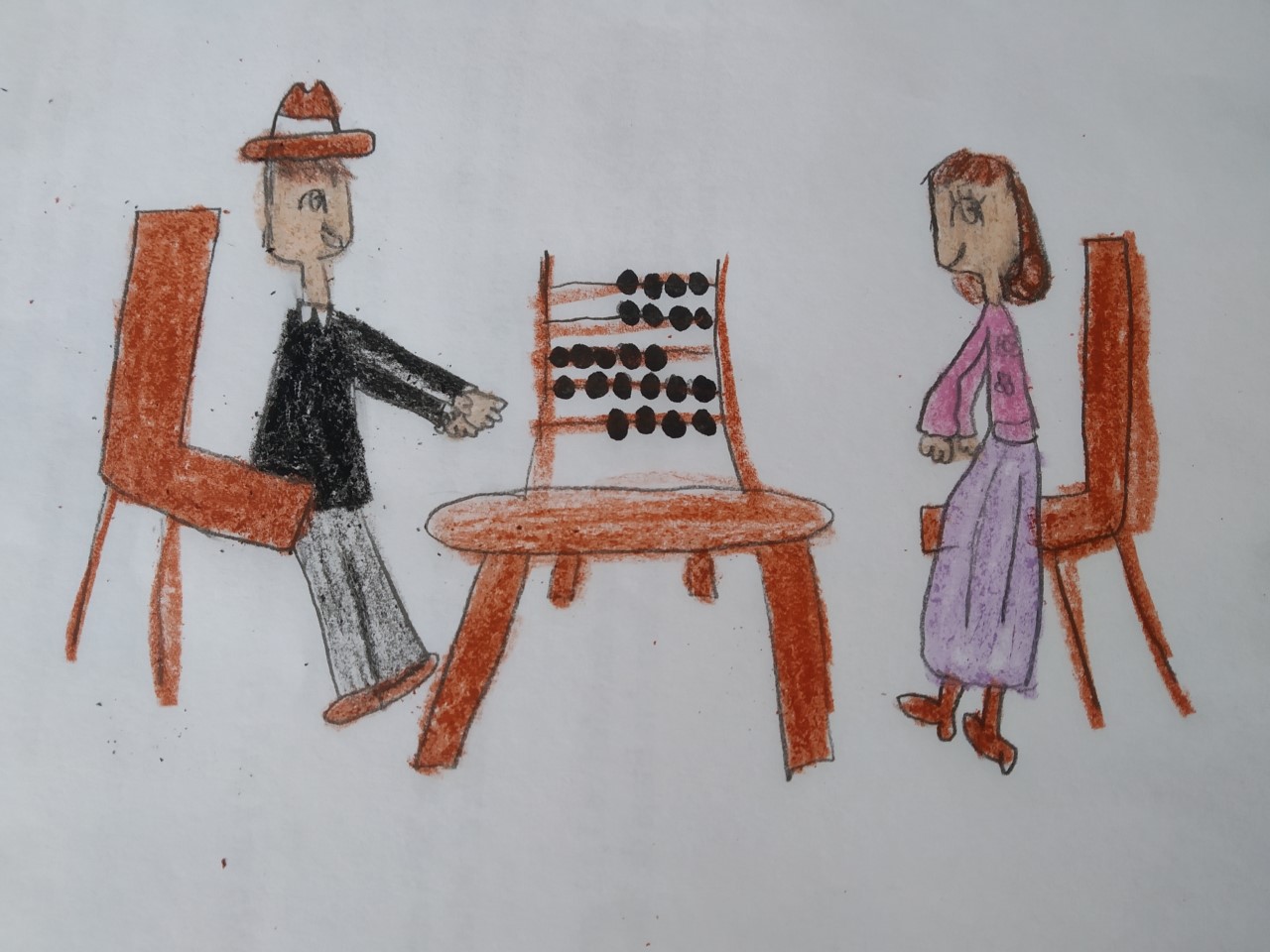
‘And you stayed there eight years: you are now, then, eighteen?’
I assented.
‘Arithmetic, you see, is useful; without its aid, I should hardly have been able to guess your age. It is a point difficult to fix where the features and countenance are so much at variance as in your case
There
he goes! Nothing in his pockets, nothing up his sleeves...and he
determines her age. Nowadays, Mr Rochester would be accused of doing
mansplaining, but I recognize his merit of setting out nimbly the
ecuation 10+8=18.
I
wonder whether this skill will help him to manage to flirt with her.
I´ll find out when I finish the book.
You
aint got but two shells. Maybe just one. And they’ll hear the shot.
Yes
they will. But you won’t.
How
do you figure that?
Because
the bullet travels faster than sound. It will be in your brain before
you can hear it. To hear it you will need a frontal lobe and things
with names like colliculus and temporal gyrus and you won’t
have them anymore. They’ll just be soup.
I
think he is right. The speed of sound is about 340 m/s. So if you are
about 700 metres
away from a shooting gun, you should heard the shot two seconds later. The bullet reaches you before its sound, if it´s
supersonic. This is something that sound technicians must keep in
mind.This video explains it very well:
The
poet works with advances which he spends before
finishing anything, and he spends everything on tickets and
transfers, because poetry is a journey to the unknown, is like the
extraction of radium, where you get a gram of product after years of
work.
I
do agree. Poetry
could be compared to any process of separating components, as Bonilla recreates what
Maiakovski
wanted
to mean.Moreover,
we
may
say that any
poet
distils reality
and gets the poetic essence. The world
would be the gross sample ( the gangue) and poetry
would be the ore which you have to extract
I´ve
got robotic blood in my veins I´m
a robot which isn´t worth it any more
I
don´t know neither what I´m doing nor what I´m saying
operating
system two dot fig
I´m
moving around here
I´m
moving around there
but
I´m scared, they want to take me to pieces
my
memory fails, my hard drive fails
my
camera is broken, I see everything dark
Dude,
I get mad when I get a screw dropped
and
I´m becoming rusted because I´m metallic
and
little by little I notice I´m loosing my brightness
Old
man, like humans, I´m already loosing my reflexes
and
bad news, my garantee is over
because
I was made in Almendralejo
what
the heck, what the heck, no matter what I do,
I´ll
turn into scrap,
what
the heck, what the heck, no matter what I do,
I´ll
turn into scrap,
Prrrrii...
prrrriii... pi, Roger... Roger
Prrrrii...
prrrriii... pi, Roger... Roger
Prrrrii...
prrrriii... pi, Roger... Roger
Prrrrii...
prrrriii... pi, Roger... Roger...
I
was almost hired in Star wars
What
a terrific robot! , what a pretty thing!
but
I was programmed with a big task,
to
guess why flies rubb their little legs
it´s
taken me many years of investigation
watching
how they fly over a turd
I´m
so fed up...so fed up
I
didn´t know how hard the robot life was
Dude,
I get mad when I get a screw dropped
and
I´m becoming rusted because I´m metallic
and
little by little I notice I´m loosing my brightness
Old
man, like humans, I´m already loosing my reflexes
and
bad news, my garantee is over
because
I was made in Almendralejo
what
the heck, what the heck, no matter what I do,
I´ll
turn into scrap,
what
the heck, what the heck, no matter what I do,
I´ll
turn into scrap,
what
the heck, what the heck, no matter what I do,
I´ll
turn into scrap,
what
the heck, what the heck, no matter what I do,
I´ll
turn into scrap,
what
the heck, what the heck, no matter what I do,
I´ll
turn into scrap,
The
Flip
flops,
possessed by The Red Hot Chili Peppers spirit, re-enact the raising
of consciouness of the machines in a way that we hadn´t seen since
Blade Runner and his tears in the rain
And
it´s also remarkable the excessive nihilism of the expression "
what the heck, what the heck, no matter what I do, I´ll turn into
scrap",
completely human. The robot almost seems to start singing by Camarón
that song of" He also condemns us to death when God gives us the
life"
And
that´s the way we both, robots and obsolescent humans,are living. On
the one hand, we complain about the dissatisfaction of the researches
and the turds, and on the other one, we are afraid of being taken
apart at a junkjard.